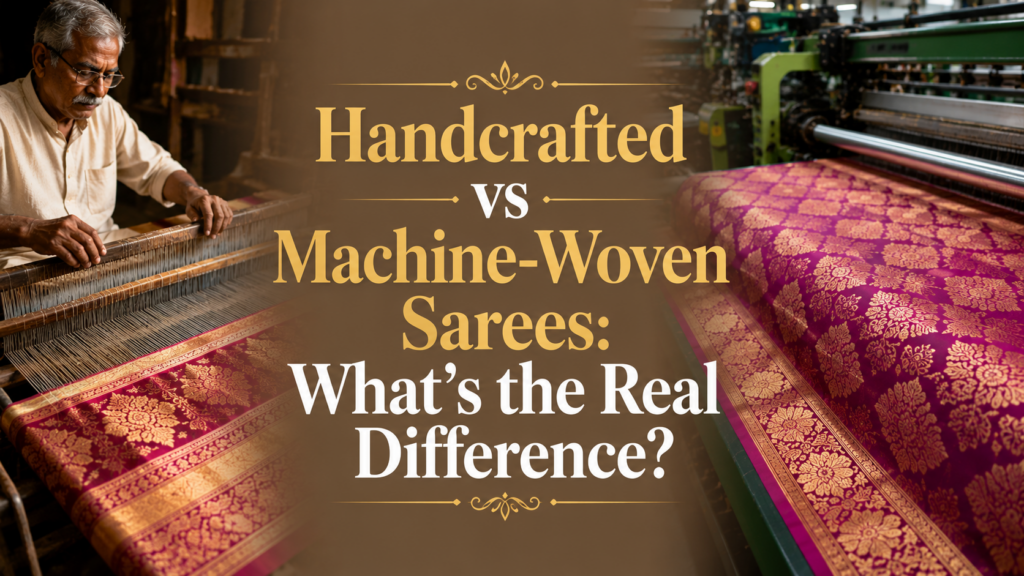
7 Important Differences Between Handcrafted and Machine-Woven Sarees
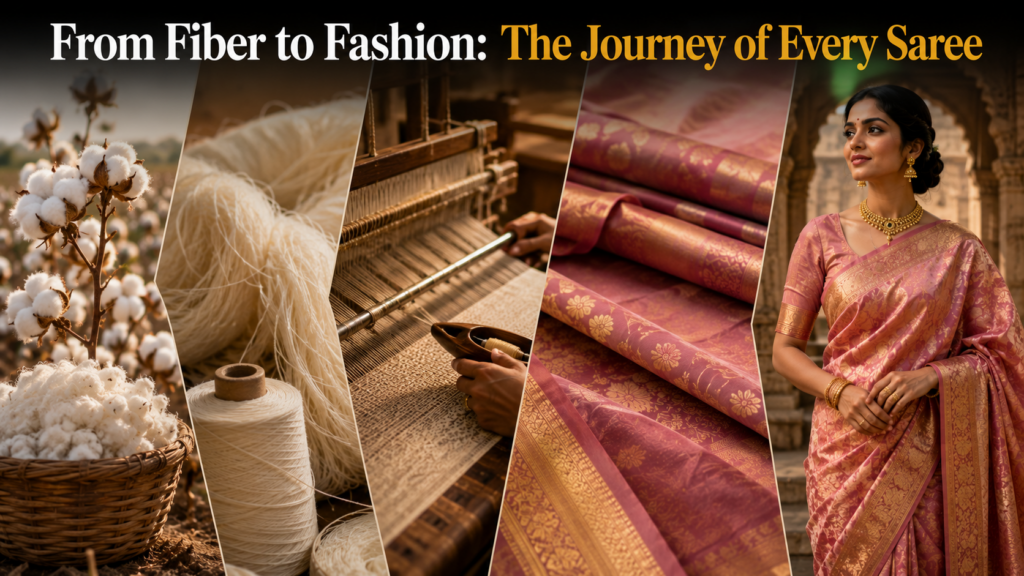
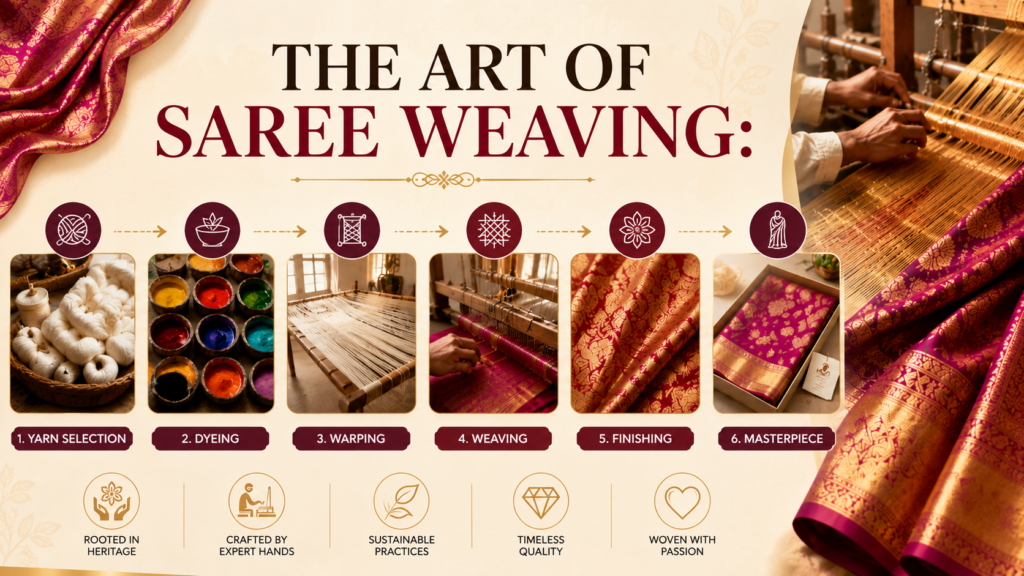
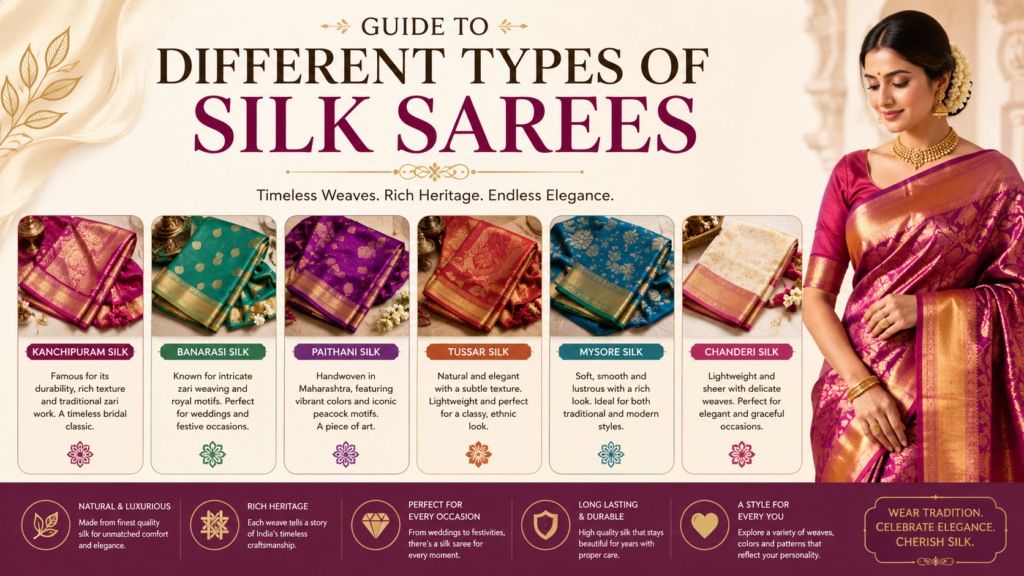
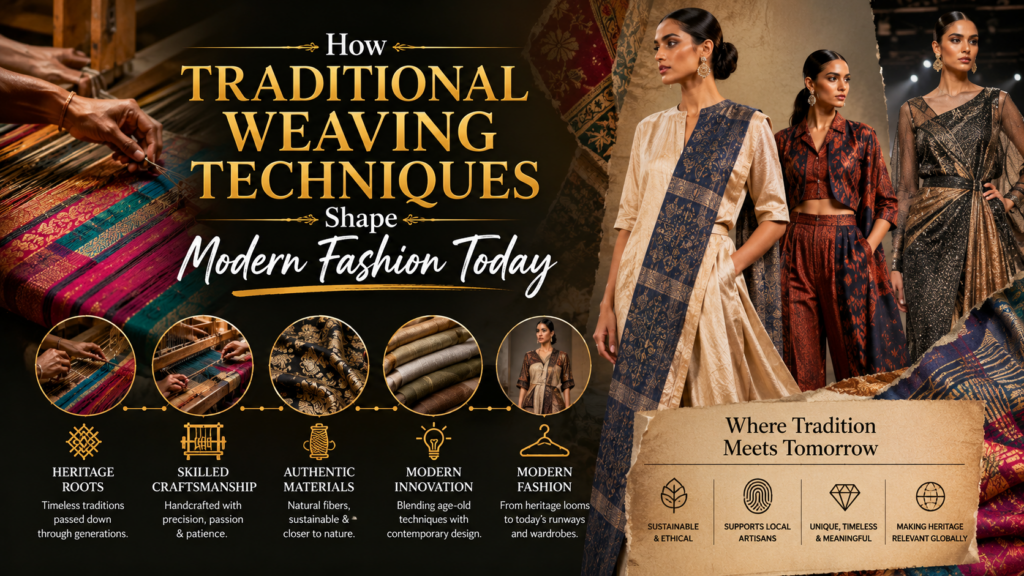
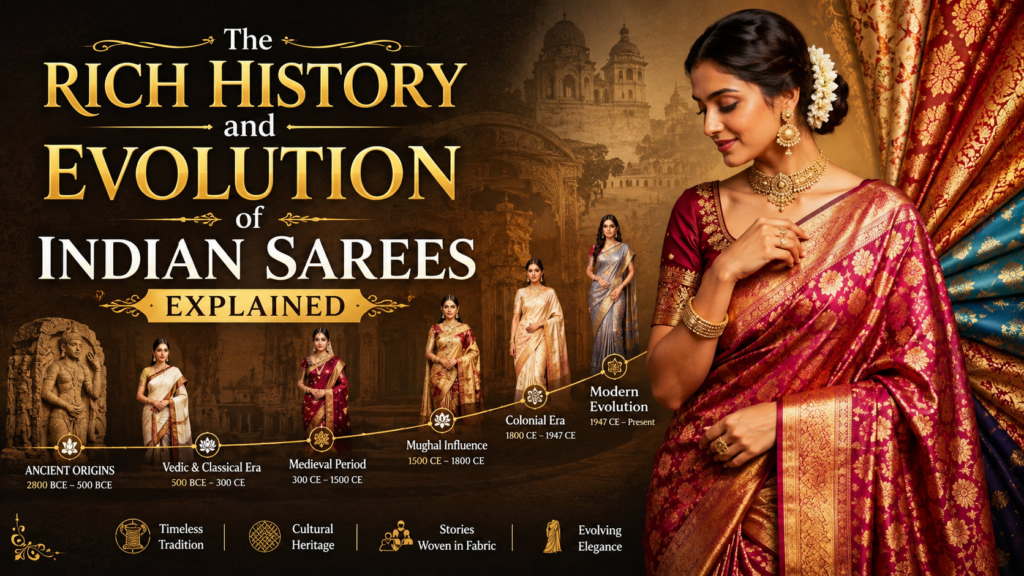
Handcrafted and Machine-Woven Sarees may appear similar at first glance, but the difference becomes clear when you look closely at the craftsmanship, texture, quality, and heritage behind each piece. Sarees have been an integral part of Indian fashion for centuries, and the methods used to create them have evolved significantly over time. Today, consumers can choose between traditional handcrafted sarees made by skilled artisans and machine-woven sarees produced using modern manufacturing processes. Both options have their advantages, but understanding their differences can help you make informed purchasing decisions that align with your style, budget, and appreciation for craftsmanship. we celebrate the artistry of Indian textiles and believe that understanding the value behind every weave allows customers to make more meaningful fashion choices. Why Understanding Handcrafted and Machine-Woven Sarees Matters The choice between Handcrafted and Machine-Woven Sarees goes beyond appearance. It affects: Quality Durability Comfort Uniqueness Sustainability Cultural preservation Knowing how each saree is made can help you recognize the true value of the garment and choose the option that best suits your needs. 1. The Weaving Process Is Completely Different The most significant distinction between handcrafted and machine-woven sarees lies in how they are produced. Handcrafted Sarees Handcrafted sarees are woven manually by skilled artisans using traditional handlooms. Every thread is carefully placed through a labor-intensive process that requires patience, expertise, and years of training. Machine-Woven Sarees Machine-woven sarees are produced using automated power looms or industrial machinery. These machines can create fabrics quickly and consistently with minimal manual intervention. While machines offer efficiency, handcrafted weaving reflects the personal skill and artistry of the weaver. 2. Craftsmanship and Artistic Value One of the most admired qualities of Handcrafted and Machine-Woven Sarees is the level of craftsmanship involved. Handcrafted Sarees Each handcrafted saree carries the signature touch of the artisan. Minor variations often occur naturally, making every piece unique. Artisans create: Intricate motifs Detailed borders Traditional patterns Complex weaving designs Machine-Woven Sarees Machine production focuses on uniformity and consistency. Every saree is nearly identical to the next. Although machine weaving can replicate designs, it often lacks the individuality and artistic depth associated with handmade textiles. 3. Time Required for Production The production timeline differs dramatically. Handcrafted Sarees Depending on complexity, artisans may spend: Several days Several weeks Even months creating a single saree. Luxury sarees such as Banarasi, Kanjeevaram, and Patola often require extensive weaving time. Machine-Woven Sarees Machines can produce sarees within hours or a few days, enabling large-scale manufacturing. This efficiency helps meet growing market demand but sacrifices the exclusivity of handmade creations. 4. Fabric Quality and Texture Fabric quality is another important factor when comparing Handcrafted and Machine-Woven Sarees. Handcrafted Sarees Handwoven textiles often feature: Rich texture Natural softness Superior drape Authentic character The careful handling of yarn contributes to a refined feel and elegant appearance. Machine-Woven Sarees Machine-made fabrics typically have: Uniform texture Consistent structure Smoother production finish While visually appealing, they may not offer the same depth and richness found in handcrafted fabrics. 5. Durability and Longevity Many consumers assume machine production automatically creates stronger textiles, but handcrafted sarees are often highly durable. Handcrafted Sarees Because artisans pay close attention to weaving quality, handcrafted sarees can last for decades when properly maintained. Many become treasured family heirlooms passed down through generations. Machine-Woven Sarees Durability varies depending on fabric quality and manufacturing standards. While some machine-made sarees offer excellent longevity, lower-cost options may wear out more quickly. 6. Pricing and Value The price difference between Handcrafted and Machine-Woven Sarees often reflects the production process. Handcrafted Sarees Factors influencing higher prices include: Artisan labor Time-intensive weaving Specialized skills Traditional craftsmanship Although they require a larger investment, handcrafted sarees often provide exceptional long-term value. Machine-Woven Sarees Machine production reduces labor costs and increases efficiency. As a result, machine-made sarees are generally more affordable and accessible to a wider audience. 7. Cultural and Heritage Significance Perhaps the most meaningful difference involves cultural preservation. Handcrafted Sarees Purchasing handcrafted sarees supports: Artisan communities Traditional weaving techniques Cultural heritage Local economies These sarees help preserve centuries-old textile traditions. Machine-Woven Sarees Machine production prioritizes scalability and commercial efficiency. While it makes sarees more widely available, it does not contribute directly to preserving traditional craftsmanship in the same way. Advantages of Handcrafted Sarees Choosing handcrafted sarees offers several benefits: Unique designs Superior craftsmanship Authentic heritage value Better artistic detailing Support for artisans Potential heirloom quality For many buyers, these advantages justify the higher investment. Advantages of Machine-Woven Sarees Machine-made sarees also offer practical benefits: Affordable pricing Consistent quality Faster availability Wide variety of designs Easy accessibility These qualities make them attractive for everyday wear and budget-conscious shoppers. How to Identify Handcrafted Sarees When shopping, look for these signs: Slight Variations Minor irregularities often indicate handwoven craftsmanship. Rich Texture Handcrafted fabrics typically have greater depth and character. Detailed Weaving Intricate motifs and borders often showcase artisan expertise. Authenticity Certifications Many premium handloom sarees include certifications verifying their origin and craftsmanship. Which Option Is Right for You? The choice between Handcrafted and Machine-Woven Sarees depends on your priorities. Choose handcrafted sarees if you value: Heritage Artistry Exclusivity Long-term investment Choose machine-woven sarees if you prioritize: Affordability Convenience Everyday practicality Consistency Many wardrobes benefit from including both options for different occasions. The Growing Demand for Handcrafted Fashion Modern consumers increasingly appreciate authenticity and sustainability. As interest in ethical fashion grows, handcrafted sarees are gaining renewed attention for their: Artisan value Cultural significance Sustainable production methods Timeless appeal This trend is helping preserve traditional weaving communities while encouraging consumers to invest in meaningful fashion choices. Conclusion Understanding the differences between Handcrafted and Machine-Woven Sarees allows you to appreciate the craftsmanship behind every weave. While machine-made sarees offer affordability and convenience, handcrafted sarees represent artistry, heritage, and generations of textile expertise. we believe every saree tells a story. Whether you choose a handcrafted masterpiece or a beautifully made machine-woven design, knowing the journey behind the fabric helps you make a more informed and rewarding choice. Frequently Asked Questions What