Author name: Abhilasha Raut

7 Important Differences Between Handcrafted and Machine-Woven Sarees
Blog

7 Important Differences Between Handcrafted and Machine-Woven Sarees

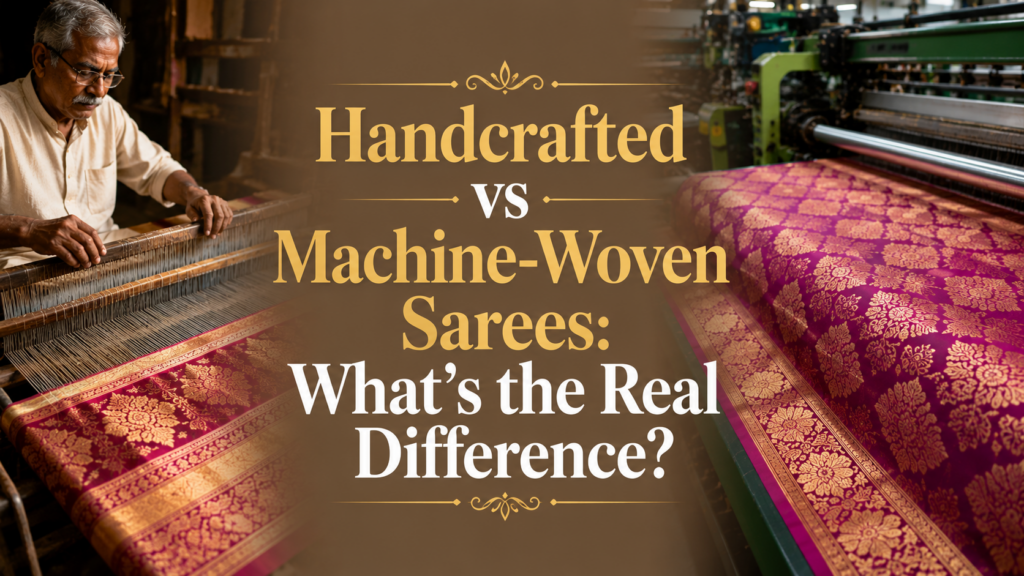
Handcrafted and Machine-Woven Sarees may appear similar at first glance, but the difference becomes clear when you look closely at the craftsmanship, texture, quality, and heritage behind each piece. Sarees have been an integral part of Indian fashion for centuries, and the methods used to create them have evolved significantly over time. Today, consumers can choose between traditional handcrafted sarees made by skilled artisans and machine-woven sarees produced using modern manufacturing processes. Both options have their advantages, but understanding their differences can help you make informed purchasing decisions that align with your style, budget, and appreciation for craftsmanship. we celebrate the artistry of Indian textiles and believe that understanding the value behind every weave allows customers to make more meaningful fashion choices. Why Understanding Handcrafted and Machine-Woven Sarees Matters The choice between Handcrafted and Machine-Woven Sarees goes beyond appearance. It affects: Quality Durability Comfort Uniqueness Sustainability Cultural preservation Knowing how each saree is made can help you recognize the true value of the garment and choose the option that best suits your needs. 1. The Weaving Process Is Completely Different The most significant distinction between handcrafted and machine-woven sarees lies in how they are produced. Handcrafted Sarees Handcrafted sarees are woven manually by skilled artisans using traditional handlooms. Every thread is carefully placed through a labor-intensive process that requires patience, expertise, and years of training. Machine-Woven Sarees Machine-woven sarees are produced using automated power looms or industrial machinery. These machines can create fabrics quickly and consistently with minimal manual intervention. While machines offer efficiency, handcrafted weaving reflects the personal skill and artistry of the weaver. 2. Craftsmanship and Artistic Value One of the most admired qualities of Handcrafted and Machine-Woven Sarees is the level of craftsmanship involved. Handcrafted Sarees Each handcrafted saree carries the signature touch of the artisan. Minor variations often occur naturally, making every piece unique. Artisans create: Intricate motifs Detailed borders Traditional patterns Complex weaving designs Machine-Woven Sarees Machine production focuses on uniformity and consistency. Every saree is nearly identical to the next. Although machine weaving can replicate designs, it often lacks the individuality and artistic depth associated with handmade textiles. 3. Time Required for Production The production timeline differs dramatically. Handcrafted Sarees Depending on complexity, artisans may spend: Several days Several weeks Even months creating a single saree. Luxury sarees such as Banarasi, Kanjeevaram, and Patola often require extensive weaving time. Machine-Woven Sarees Machines can produce sarees within hours or a few days, enabling large-scale manufacturing. This efficiency helps meet growing market demand but sacrifices the exclusivity of handmade creations. 4. Fabric Quality and Texture Fabric quality is another important factor when comparing Handcrafted and Machine-Woven Sarees. Handcrafted Sarees Handwoven textiles often feature: Rich texture Natural softness Superior drape Authentic character The careful handling of yarn contributes to a refined feel and elegant appearance. Machine-Woven Sarees Machine-made fabrics typically have: Uniform texture Consistent structure Smoother production finish While visually appealing, they may not offer the same depth and richness found in handcrafted fabrics. 5. Durability and Longevity Many consumers assume machine production automatically creates stronger textiles, but handcrafted sarees are often highly durable. Handcrafted Sarees Because artisans pay close attention to weaving quality, handcrafted sarees can last for decades when properly maintained. Many become treasured family heirlooms passed down through generations. Machine-Woven Sarees Durability varies depending on fabric quality and manufacturing standards. While some machine-made sarees offer excellent longevity, lower-cost options may wear out more quickly. 6. Pricing and Value The price difference between Handcrafted and Machine-Woven Sarees often reflects the production process. Handcrafted Sarees Factors influencing higher prices include: Artisan labor Time-intensive weaving Specialized skills Traditional craftsmanship Although they require a larger investment, handcrafted sarees often provide exceptional long-term value. Machine-Woven Sarees Machine production reduces labor costs and increases efficiency. As a result, machine-made sarees are generally more affordable and accessible to a wider audience. 7. Cultural and Heritage Significance Perhaps the most meaningful difference involves cultural preservation. Handcrafted Sarees Purchasing handcrafted sarees supports: Artisan communities Traditional weaving techniques Cultural heritage Local economies These sarees help preserve centuries-old textile traditions. Machine-Woven Sarees Machine production prioritizes scalability and commercial efficiency. While it makes sarees more widely available, it does not contribute directly to preserving traditional craftsmanship in the same way. Advantages of Handcrafted Sarees Choosing handcrafted sarees offers several benefits: Unique designs Superior craftsmanship Authentic heritage value Better artistic detailing Support for artisans Potential heirloom quality For many buyers, these advantages justify the higher investment. Advantages of Machine-Woven Sarees Machine-made sarees also offer practical benefits: Affordable pricing Consistent quality Faster availability Wide variety of designs Easy accessibility These qualities make them attractive for everyday wear and budget-conscious shoppers. How to Identify Handcrafted Sarees When shopping, look for these signs: Slight Variations Minor irregularities often indicate handwoven craftsmanship. Rich Texture Handcrafted fabrics typically have greater depth and character. Detailed Weaving Intricate motifs and borders often showcase artisan expertise. Authenticity Certifications Many premium handloom sarees include certifications verifying their origin and craftsmanship. Which Option Is Right for You? The choice between Handcrafted and Machine-Woven Sarees depends on your priorities. Choose handcrafted sarees if you value: Heritage Artistry Exclusivity Long-term investment Choose machine-woven sarees if you prioritize: Affordability Convenience Everyday practicality Consistency Many wardrobes benefit from including both options for different occasions. The Growing Demand for Handcrafted Fashion Modern consumers increasingly appreciate authenticity and sustainability. As interest in ethical fashion grows, handcrafted sarees are gaining renewed attention for their: Artisan value Cultural significance Sustainable production methods Timeless appeal This trend is helping preserve traditional weaving communities while encouraging consumers to invest in meaningful fashion choices. Conclusion Understanding the differences between Handcrafted and Machine-Woven Sarees allows you to appreciate the craftsmanship behind every weave. While machine-made sarees offer affordability and convenience, handcrafted sarees represent artistry, heritage, and generations of textile expertise. we believe every saree tells a story. Whether you choose a handcrafted masterpiece or a beautifully made machine-woven design, knowing the journey behind the fabric helps you make a more informed and rewarding choice. Frequently Asked Questions What
10 Essential Tips for Choosing the Perfect Saree Fabric
Blog

10 Essential Tips for Choosing the Perfect Saree Fabric

Choosing the Perfect Saree Fabric is one of the most important decisions when buying a saree. While colors, designs, and embellishments often grab attention first, the fabric determines how comfortable the saree feels, how beautifully it drapes, and how suitable it is for different occasions. A well-chosen fabric can enhance your confidence, complement your style, and ensure that your saree remains a treasured part of your wardrobe for years. India’s rich textile heritage offers an incredible variety of saree fabrics, ranging from luxurious silks and lightweight chiffons to breathable cottons and elegant linens. With so many options available, understanding the qualities of each fabric can help you make a more informed choice. This guide explores 10 essential tips that will help you select the perfect saree fabric for every occasion and lifestyle. Why Choosing the Perfect Saree Fabric Matters The fabric forms the foundation of every saree. It influences: Comfort Appearance Durability Drape Maintenance Seasonal suitability Even the most beautiful design may not deliver the desired experience if the fabric does not suit your needs. Investing time in understanding fabric types can help you find sarees that offer both style and practicality. 1. Consider the Occasion First Different occasions require different saree fabrics. Weddings and Grand Celebrations Premium fabrics such as: Banarasi Silk Kanjeevaram Silk Paithani Silk create a luxurious and festive appearance. Office Wear Comfortable fabrics such as: Cotton Linen Chanderi offer elegance without feeling overly heavy. Parties and Social Events Lightweight fabrics such as: Organza Chiffon Georgette provide effortless sophistication. Choosing a fabric based on the occasion ensures that your saree looks appropriate and feels comfortable. 2. Evaluate Climate and Weather Conditions Climate plays a major role in fabric selection. Summer Choose breathable fabrics such as: Cotton Linen Chanderi These fabrics help keep you cool and comfortable. Winter Opt for richer fabrics such as: Silk Brocade Heavier handwoven textiles These provide warmth while maintaining elegance. Selecting season-appropriate fabrics improves overall comfort throughout the day. 3. Understand Different Saree Fabric Types Knowing the characteristics of popular fabrics helps simplify the buying process. Silk Luxurious appearance Rich drape Ideal for celebrations Cotton Breathable and comfortable Perfect for daily wear Linen Lightweight and stylish Excellent for modern wardrobes Chiffon Soft and flowing Elegant for evening occasions Georgette Easy to drape Travel-friendly Organza Sheer and sophisticated Popular in contemporary fashion Each fabric offers unique benefits depending on your personal preferences. 4. Pay Attention to Drape Quality The way a saree falls and moves is known as its drape. A good drape: Enhances your silhouette Creates elegant pleats Improves overall appearance Silk and georgette fabrics generally offer graceful draping, while cotton sarees create a more structured look. Always consider how the fabric behaves when worn. 5. Prioritize Comfort Style is important, but comfort should never be overlooked. When evaluating fabric comfort, consider: Softness Weight Breathability Skin sensitivity A saree that feels comfortable allows you to enjoy weddings, events, and celebrations without distraction. Premium fabrics often provide a better balance of beauty and comfort. 6. Consider Maintenance Requirements Different fabrics require different levels of care. Low-Maintenance Fabrics Cotton Linen Georgette These are generally easier to manage. High-Maintenance Fabrics Banarasi Silk Kanjeevaram Silk Heavily embroidered sarees These often require professional cleaning and careful storage. Understanding maintenance needs helps you choose fabrics that fit your lifestyle. 7. Assess Fabric Durability A high-quality saree should remain beautiful for years. Durability depends on: Fiber quality Weaving technique Fabric strength Proper care Silk, linen, and premium cotton fabrics are often valued for their longevity. Investing in durable fabrics can provide excellent long-term value. 8. Match the Fabric to Your Personal Style Your saree should reflect your personality. Traditional Style Consider: Banarasi Silk Kanjeevaram Silk Handloom Sarees Modern Style Choose: Organza Georgette Designer Linen Sarees Minimalist Style Opt for: Chanderi Cotton Simple woven fabrics The right fabric helps create a look that feels authentic and confident. 9. Examine Fabric Quality Carefully Before purchasing a saree, inspect the fabric closely. Look for: Smooth texture Consistent weaving Rich color depth Strong construction Neat finishing Premium saree fabrics often reveal their quality through touch and appearance. A careful inspection helps ensure that you receive genuine value. 10. Invest in Premium Fabrics When Possible While budget is always a consideration, premium fabrics often offer superior benefits. Advantages include: Better comfort Enhanced drape Greater durability Elegant appearance Long-term value A well-crafted saree made from premium materials can remain a favorite in your wardrobe for decades. Many women consider quality sarees worthwhile investments because they combine beauty, functionality, and timeless appeal. Popular Saree Fabrics and Their Best Uses Fabric Best For Silk Weddings and celebrations Cotton Daily wear and office wear Linen Casual and professional settings Chiffon Parties and evening events Georgette Modern occasions and travel Organza Fashion-forward celebrations Chanderi Daytime functions and festivals Tussar Silk Cultural and formal events Common Mistakes to Avoid When choosing a saree fabric, avoid: Selecting based only on appearance Ignoring weather conditions Overlooking comfort Forgetting maintenance requirements Purchasing without checking fabric quality Making informed decisions helps ensure long-term satisfaction. Why Quality Matters The difference between an ordinary saree and an exceptional one often comes down to fabric quality. Premium fabrics provide: Better texture Superior craftsmanship Greater durability More elegant drape Improved comfort  quality remains at the heart of every saree because exceptional fabrics create unforgettable experiences. Conclusion Choosing the Perfect Saree Fabric involves much more than selecting a beautiful design. The right fabric influences comfort, elegance, durability, and overall satisfaction. By considering factors such as occasion, climate, drape, maintenance, and personal style, you can confidently choose sarees that enhance both your appearance and your wardrobe. Whether you prefer luxurious silks, breathable cottons, elegant linens, or contemporary organzas, understanding fabric characteristics allows you to make informed choices that stand the test of time. Frequently Asked Questions Which saree fabric is best for daily wear? Cotton and linen sarees are generally the best choices for everyday comfort and practicality. What is the most luxurious saree fabric? Banarasi Silk and Kanjeevaram Silk

7 Powerful Reasons Premium Saree Fabrics Are Worth Every Investment
Blog

7 Powerful Reasons Premium Saree Fabrics Are Worth Every Investment

Premium Saree Fabrics are the foundation of every elegant, luxurious, and timeless saree. While two sarees may appear similar at first glance, the quality of the fabric often determines how they look, feel, drape, and last over time. From the softness of the fibers to the precision of the weaving, premium fabrics transform a saree from a simple garment into a statement of sophistication and craftsmanship. In today’s fashion world, consumers are becoming increasingly conscious about quality, sustainability, and long-term value. Rather than purchasing multiple low-quality garments, many women are choosing well-crafted sarees made from superior materials. Understanding what separates premium saree fabrics from ordinary alternatives can help you make smarter fashion investments and appreciate the artistry behind exceptional sarees. At Rashmiwala, we believe that true luxury begins with quality. This guide explores the characteristics that make premium saree fabrics stand out and why they continue to be highly valued across generations. Why Fabric Quality Matters in a Saree The fabric is the most important element of any saree. It affects: Comfort Appearance Durability Drape Breathability Maintenance requirements Even the most beautiful design cannot compensate for poor-quality fabric. Premium materials not only enhance the overall look of a saree but also ensure that it remains elegant and wearable for years. A high-quality saree feels different from the moment you touch it. The texture, weight, softness, and finish immediately reveal the level of craftsmanship involved in its creation. The Difference Begins with Raw Materials One of the biggest distinctions between ordinary and premium saree fabrics is the quality of the raw materials used. Premium sarees are typically created using carefully selected fibers that offer superior performance and aesthetics. High-Grade Silk Luxury silk sarees use premium silk fibers known for: Natural sheen Smooth texture Excellent durability Elegant drape The quality of silk directly influences the richness and longevity of the finished saree. Superior Cotton Premium cotton sarees use fine-quality cotton fibers that create fabrics that are: Soft Breathable Comfortable Durable Higher-grade cotton provides a smoother finish and better resistance to wear. Authentic Linen Premium linen sarees feature carefully processed fibers that offer: Lightweight comfort Natural texture Elegant appearance Long-lasting quality The purity of the fiber significantly impacts the saree’s overall feel and durability. Exceptional Weaving Techniques Premium fabrics are often distinguished by the weaving techniques used to create them. Many luxury sarees are produced through traditional handloom weaving methods that require years of expertise. Handloom Excellence Handwoven sarees offer several advantages: Unique character Superior detailing Better craftsmanship Artistic authenticity Unlike machine-made fabrics, handloom sarees often feature subtle variations that reflect the artisan’s skill. Intricate Design Integration Premium weaving techniques allow artisans to create: Complex motifs Detailed borders Artistic pallus Rich textures These details contribute significantly to the overall beauty and value of the saree. Superior Texture and Feel One of the easiest ways to identify premium saree fabrics is through touch. High-quality fabrics typically feel: Softer Smoother More refined Comfortable against the skin Premium fabrics are processed with great care to preserve their natural qualities while enhancing comfort. The difference becomes especially noticeable during extended wear, where superior fabrics maintain comfort without feeling heavy or restrictive. Better Drape and Movement The way a saree drapes is heavily influenced by fabric quality. Premium saree fabrics create graceful folds and elegant silhouettes because they possess: Balanced weight Flexible structure Natural flow Refined texture A well-crafted saree moves beautifully and enhances the wearer’s appearance without requiring constant adjustment. This draping quality is one reason premium sarees are highly preferred for weddings, celebrations, and formal occasions. Richer Colors and Lasting Vibrancy Color quality is another important indicator of premium fabrics. Luxury sarees often undergo advanced dyeing processes that produce: Rich color depth Uniform shades Enhanced vibrancy Improved color retention Premium fabrics maintain their visual appeal even after years of careful use. In contrast, lower-quality fabrics may fade quickly or lose their original richness over time. Enhanced Durability Premium saree fabrics are designed to withstand years of wear when properly maintained. Their durability comes from: Superior fibers Strong weaving structures High-quality finishing Skilled craftsmanship Many premium sarees become family heirlooms because they remain beautiful for decades. Investing in quality often proves more economical over time because the saree retains both its appearance and value. Attention to Finishing Details Luxury sarees receive meticulous attention during the finishing process. This may include: Fabric softening Precision ironing Quality inspections Surface enhancement Careful folding and packaging These finishing touches contribute to the refined appearance associated with premium textiles. The result is a saree that looks polished, elegant, and ready for special occasions. The Role of Artisan Craftsmanship Behind every premium saree is the expertise of skilled artisans. Many weaving traditions have been preserved through generations, with artisans dedicating years to mastering their craft. Their skills include: Yarn preparation Loom operation Pattern creation Dyeing techniques Quality control This human touch adds authenticity and uniqueness that mass-produced fabrics cannot replicate. Supporting premium handcrafted sarees also helps sustain traditional weaving communities and preserve cultural heritage. Popular Premium Saree Fabrics Several fabrics are widely recognized for their luxurious qualities. Banarasi Silk Known for intricate zari work and regal elegance. Kanjeevaram Silk Celebrated for durability, vibrant colors, and rich craftsmanship. Tussar Silk Valued for its natural texture and understated sophistication. Chanderi Appreciated for its lightweight feel and graceful sheen. Pure Linen Favored for contemporary elegance and breathable comfort. Organza Popular for its sheer beauty and modern appeal. Each of these fabrics offers a unique combination of luxury, craftsmanship, and style. Why Premium Sarees Are Worth the Investment Although premium sarees often cost more initially, they provide exceptional value. Benefits include: Longer lifespan Better appearance Superior comfort Timeless style Higher craftsmanship standards Rather than being a short-term purchase, a premium saree becomes a lasting addition to your wardrobe. For many women, these sarees also carry emotional significance and are passed down through generations. How to Identify Premium Saree Fabrics When shopping for a saree, look for the following indicators: Fabric Quality Examine the softness, texture, and

The Journey of a Saree: Understanding Every Step of Production
Blog

The Journey of a Saree: Understanding Every Step of Production

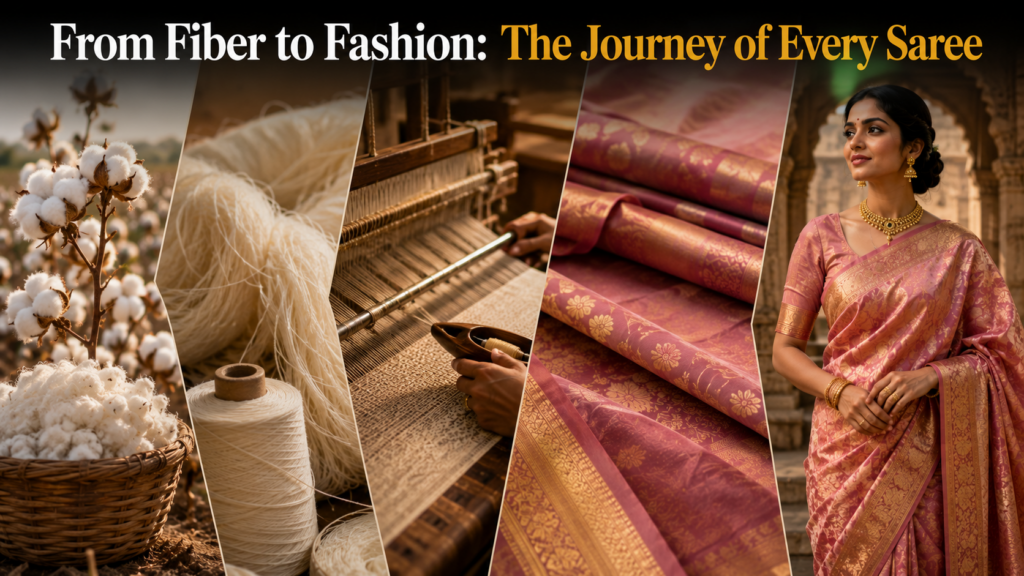
The Journey of a Saree: Understanding Every Step of Production reveals the incredible craftsmanship, expertise, and dedication behind one of India’s most iconic garments. A saree is much more than a piece of fabric; it is the result of countless hours of work involving artisans, weavers, dyers, designers, and textile experts. For centuries, sarees have represented India’s cultural heritage, artistic excellence, and textile innovation. Every saree undergoes a remarkable transformation before it reaches the wearer. From selecting raw fibers to creating intricate woven patterns and luxurious finishes, each stage contributes to the beauty and quality of the final product. Understanding The Journey of a Saree: Understanding Every Step of Production helps consumers appreciate the effort, skill, and tradition involved in creating these timeless garments. Why Understanding Saree Production Matters Learning about saree production offers several benefits: Greater appreciation for craftsmanship Better purchasing decisions Understanding of fabric quality Recognition of artisan skills Awareness of textile heritage Every stage influences the saree’s comfort, durability, appearance, and value. Step 1: Selecting the Raw Fibers Every saree begins with carefully selected fibers. Common fibers used include: Silk Cotton Linen Viscose Blended fibers The choice of fiber determines many important characteristics such as texture, weight, drape, and durability. Premium sarees often begin with the highest-quality raw materials to ensure exceptional results. Step 2: Fiber Processing and Preparation Before weaving can begin, raw fibers must be processed. This stage includes: Cleaning Sorting Combing Strengthening Proper preparation ensures that the fibers are suitable for spinning and later textile production. Quality control at this stage significantly impacts the final fabric quality. Step 3: Spinning Fibers into Yarn The next stage in The Journey of a Saree: Understanding Every Step of Production is yarn creation. Spinning transforms fibers into continuous threads that can be woven into fabric. Factors considered include: Yarn strength Thickness Uniformity Smoothness High-quality yarn contributes to stronger, more beautiful sarees. Step 4: Dyeing the Yarn Color plays a vital role in saree aesthetics. Before weaving begins, yarns are often dyed according to design requirements. This process involves: Color selection Dye preparation Controlled application Drying Professional dyeing ensures: Rich colors Consistent shades Long-lasting vibrancy Traditional and modern dyeing techniques are both widely used in the saree industry. Step 5: Designing the Saree Pattern Design planning is one of the most creative stages. Designers carefully determine: Motifs Borders Pallu designs Color combinations Pattern placement Traditional sarees often feature designs inspired by: Nature Architecture Religious symbolism Cultural heritage This stage lays the foundation for the saree’s visual identity. Step 6: Preparing the Loom The loom is the primary tool used for weaving. Before weaving begins, artisans prepare: Warp threads Weft threads Pattern settings Thread alignment Loom preparation requires precision because even minor errors can affect the final design. This step is especially important in handcrafted saree production. Step 7: Weaving the Fabric Weaving is often considered the heart of saree production. During this stage, yarns are interlaced to create fabric. Popular weaving traditions include: Banarasi Kanjeevaram Chanderi Patola Jamdani The weaving process may take: Several days Several weeks Sometimes months depending on complexity. This stage highlights the exceptional skill of Indian artisans. Step 8: Creating Borders and Pallu Designs The border and pallu are among the most distinctive features of a saree. Artisans carefully create: Decorative motifs Zari work Geometric patterns Traditional designs These elements often require additional weaving expertise and attention to detail. The beauty of many premium sarees lies in these intricate sections. Step 9: Finishing and Fabric Treatment Once weaving is complete, the saree undergoes finishing processes. These treatments improve: Softness Texture Appearance Drape Durability Finishing may include: Washing Polishing Pressing Surface enhancement This stage ensures that the saree meets quality standards before reaching consumers. Step 10: Quality Inspection Every premium saree undergoes detailed quality checks. Inspectors evaluate: Weaving consistency Fabric strength Design accuracy Color quality Finishing standards Quality inspection helps identify and correct any imperfections. This process is essential for maintaining customer satisfaction. Step 11: Packaging and Distribution The final stage in The Journey of a Saree: Understanding Every Step of Production involves preparing the saree for sale. This includes: Folding Packaging Labeling Transportation Proper packaging protects the saree and preserves its quality during storage and shipping. The finished saree is then ready to become part of someone’s wardrobe and personal story. Traditional vs Modern Saree Production Traditional Production Modern Production Handloom Weaving Automated Weaving Manual Design Creation Digital Design Tools Artisan Dyeing Advanced Dye Systems Handcrafted Details Scalable Manufacturing Heritage Techniques Technology Integration Both approaches contribute valuable strengths to the industry. How Saree Production Supports Artisan Communities The saree industry supports thousands of skilled artisans across India. These professionals include: Weavers Dyers Designers Embroiderers Textile specialists By purchasing quality sarees, consumers help preserve traditional skills and support local economies. The Role of Sustainability in Modern Saree Production Today’s textile industry increasingly focuses on: Eco-friendly fibers Water conservation Sustainable dyeing Responsible sourcing Waste reduction These practices help ensure that future generations can continue enjoying beautiful sarees while protecting the environment. Why Handmade Sarees Remain Special Handmade sarees continue to be highly valued because they offer: Unique character Artisan craftsmanship Cultural authenticity Exceptional quality Each handcrafted saree reflects the dedication and expertise of the artisan who created it. Conclusion The Journey of a Saree: Understanding Every Step of Production demonstrates the extraordinary effort required to create one of India’s most cherished garments. From fiber selection and yarn preparation to weaving, finishing, and quality inspection, every stage contributes to the saree’s beauty and value. Understanding this journey helps consumers appreciate the remarkable craftsmanship behind every saree. Whether traditional or contemporary, each saree represents a blend of heritage, artistry, and innovation that continues to inspire fashion lovers around the world. Frequently Asked Questions What is the journey of a saree? The journey of a saree includes fiber selection, yarn production, dyeing, weaving, finishing, quality inspection, and distribution. How long does saree production take? Production time varies depending on fabric type and complexity. Handwoven sarees may take weeks
Why Indian Sarees Remain Timeless Across Generations | Tradition Meets Elegance
Blog

Why Indian Sarees Remain Timeless Across Generations | Tradition Meets Elegance

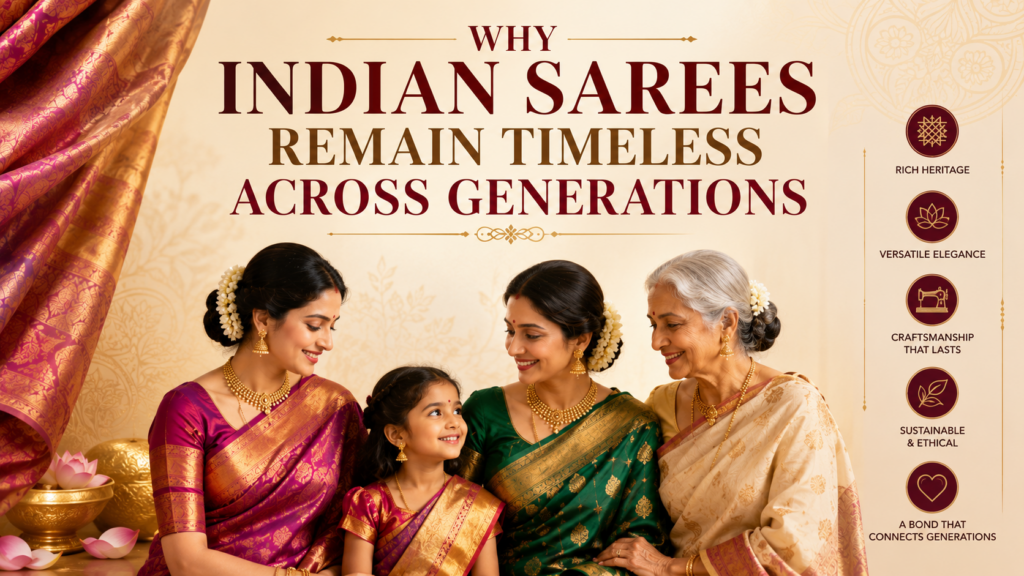
Why Indian Sarees Remain Timeless is a question that highlights the enduring appeal of one of India’s most iconic garments. Fashion trends may change every season, but some garments never lose their charm. Among them, the Indian saree stands as one of the most enduring symbols of elegance, tradition, and cultural identity. For centuries, women across India have embraced sarees for their beauty, versatility, and ability to adapt to changing times. From grandmothers passing down treasured heirloom sarees to young women styling them with contemporary flair, sarees continue to connect generations through fashion and heritage. Their remarkable ability to remain relevant despite evolving trends is what makes them truly timeless. At Rashmiwala, we celebrate the enduring appeal of Indian sarees and the reasons they continue to hold a special place in wardrobes across generations. The Rich Cultural Heritage Behind Sarees One of the primary reasons sarees remain timeless is their deep connection to Indian culture and history. The saree has been worn in the Indian subcontinent for thousands of years. Throughout history, it has evolved alongside changing societies while maintaining its traditional essence. Every region of India contributes unique weaving styles, fabrics, motifs, and draping techniques that enrich the saree’s cultural significance. Whether it is a Banarasi silk saree from Uttar Pradesh, a Kanjeevaram masterpiece from Tamil Nadu, or a Bandhani saree from Gujarat, each saree reflects centuries of artistic heritage. This cultural depth ensures that sarees are not merely garments but symbols of identity and tradition. A Perfect Blend of Tradition and Modern Fashion Many traditional garments struggle to remain relevant in modern fashion, but the saree continues to evolve without losing its roots. Contemporary designers regularly reinterpret sarees through: Modern silhouettes Innovative fabrics Designer blouses Contemporary draping styles Minimalist aesthetics Fusion fashion elements This adaptability allows sarees to appeal to both traditional and modern audiences. Young women increasingly style sarees with belts, jackets, statement jewelry, and fashionable blouses, proving that heritage fashion can seamlessly coexist with current trends. Versatility for Every Occasion One of the greatest strengths of the saree is its incredible versatility. Few garments can transition as effortlessly between different occasions. Weddings Luxurious silk sarees create a regal and elegant appearance for brides and wedding guests. Festivals Colorful traditional sarees perfectly complement festive celebrations and cultural events. Office Wear Lightweight cotton, linen, and handloom sarees offer sophistication suitable for professional environments. Casual Gatherings Modern printed sarees and simple drapes provide comfortable elegance for everyday occasions. Formal Events Designer sarees deliver glamour and refinement without sacrificing tradition. Because sarees can adapt to virtually any setting, they remain relevant across generations and lifestyles. Timeless Elegance Never Goes Out of Style Fashion trends often focus on novelty, but true elegance transcends changing tastes. The saree’s graceful drape naturally enhances the wearer’s appearance while maintaining sophistication and modesty. Its flowing silhouette creates a sense of refinement that few garments can replicate. Unlike trend-driven clothing that may feel outdated after a few years, sarees maintain their beauty regardless of changing fashion cycles. This timeless elegance contributes significantly to their enduring popularity. Exceptional Craftsmanship and Artistry Every authentic saree represents the skill and dedication of artisans who preserve traditional weaving techniques. Many handwoven sarees require: Extensive planning Intricate weaving Detailed embroidery Precision craftsmanship Generations of expertise Whether adorned with zari work, hand-painted motifs, or woven patterns, these artistic details elevate sarees from clothing to wearable works of art. Consumers increasingly appreciate handcrafted products, making traditional sarees more valuable than ever. Sarees Become Family Heirlooms Unlike most modern fashion purchases, sarees often carry emotional and sentimental value. Many families preserve cherished sarees across generations. A grandmother’s wedding saree may later become a treasured possession for her daughter or granddaughter. These heirloom sarees hold memories of: Weddings Festivals Family celebrations Cultural traditions Personal milestones This emotional connection strengthens the saree’s timeless appeal and ensures its continued relevance within families. Endless Variety of Fabrics and Styles The diversity of Indian sarees is unmatched. Women can choose from a wide range of fabrics including: Silk Cotton Linen Chiffon Georgette Organza Tussar Silk Crepe Similarly, saree styles vary across regions and fashion preferences. Popular varieties include: Banarasi Sarees Kanjeevaram Sarees Paithani Sarees Chanderi Sarees Bandhani Sarees Patola Sarees Organza Sarees This vast selection ensures there is a saree suitable for every age group, personality, and occasion. Sarees Celebrate Individuality One reason sarees remain beloved across generations is their ability to reflect personal style. Women can express themselves through: Fabric choices Color palettes Weaving patterns Blouse designs Accessories Draping techniques The same saree can appear entirely different depending on how it is styled. This versatility encourages creativity and allows women to make the garment uniquely their own. Sustainability Supports Their Continued Relevance Modern consumers are increasingly concerned about sustainable fashion. The saree aligns naturally with these values because it emphasizes: Durability Longevity Reusability Handcrafted production Ethical craftsmanship Many high-quality sarees last for decades, reducing the need for frequent replacements. Handloom sarees also support artisan communities and traditional production methods that often have a lower environmental impact than mass manufacturing. As sustainability becomes more important, sarees continue to gain appreciation among conscious consumers. Bollywood and Popular Culture Keep Sarees Relevant Indian cinema has played a significant role in maintaining the popularity of sarees. For decades, iconic actresses have showcased stunning saree looks that inspire fashion enthusiasts across generations. Bollywood has demonstrated that sarees can be: Traditional Romantic Glamorous Contemporary Elegant Fashion-forward Today, social media influencers, designers, and celebrities continue to reinvent saree styling for modern audiences. This constant visibility helps ensure the saree remains fashionable and aspirational. The Global Appeal of Indian Sarees Indian sarees are increasingly admired worldwide for their beauty, craftsmanship, and cultural significance. International fashion designers frequently draw inspiration from traditional Indian textiles and draping techniques. Global appreciation for handmade luxury and cultural authenticity has elevated the saree’s status beyond national boundaries. As a result, sarees continue to gain recognition as timeless fashion pieces on the global stage. Why Future Generations Will Continue to Embrace

The Art of Saree Weaving: From Yarn to Masterpiece
Blog

The Art of Saree Weaving: From Yarn to Masterpiece

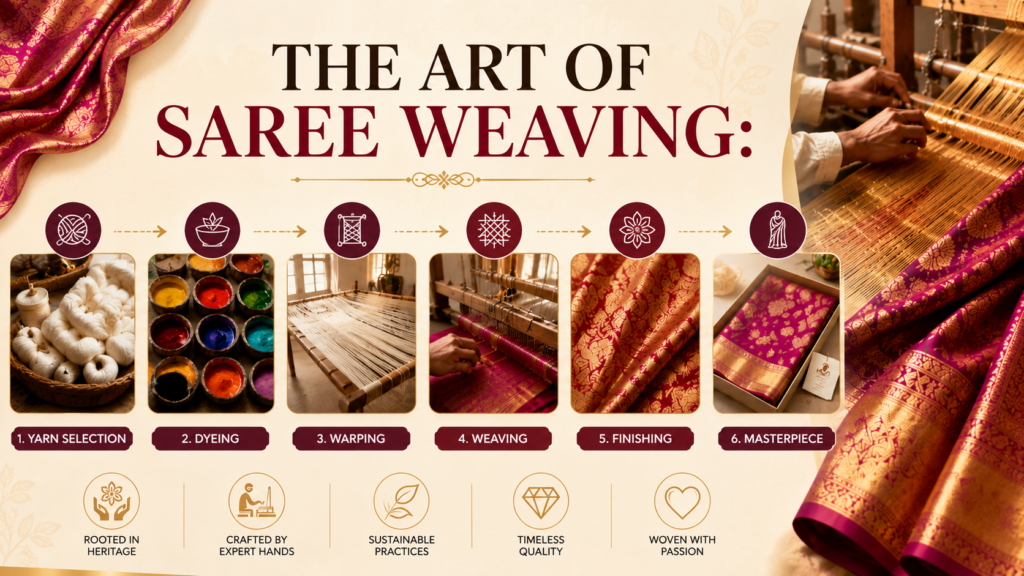
The saree is more than just a garment—it is a work of art woven with tradition, culture, and generations of craftsmanship. Behind every beautiful saree lies a fascinating journey that transforms simple yarn into a masterpiece of textile artistry. From the careful selection of fibers to the intricate weaving techniques practiced by skilled artisans, saree weaving is a process that combines creativity, precision, and dedication. For centuries, India’s weaving communities have preserved this remarkable craft, producing some of the world’s most admired textiles. Every motif, border, and pattern tells a story of heritage, skill, and cultural identity. Understanding the art of saree weaving helps us appreciate the extraordinary effort that goes into creating these timeless garments. In this guide, Rashmiwala explores the complete journey of saree weaving—from yarn to masterpiece. The Rich Heritage of Saree Weaving India has one of the oldest textile traditions in the world. Historical records suggest that weaving practices existed in the Indian subcontinent thousands of years ago. Over time, different regions developed unique weaving styles that reflected local culture, traditions, and artistic influences. Today, famous weaving centers across India continue to produce iconic sarees such as: Banarasi Sarees Kanjeevaram Sarees Chanderi Sarees Tussar Silk Sarees Paithani Sarees Bandhani Sarees Patola Sarees Each of these weaving traditions showcases exceptional craftsmanship and represents centuries of textile expertise. Step 1: Selecting the Right Yarn Every saree begins with the selection of yarn, which forms the foundation of the final fabric. The quality of the yarn directly affects: Texture Durability Appearance Comfort Drape Different types of yarn are used depending on the desired fabric. Silk Yarn Silk is prized for its luxurious sheen and smooth texture. It is commonly used for premium wedding and festive sarees. Cotton Yarn Cotton offers breathability and comfort, making it ideal for everyday wear and warm climates. Linen Yarn Linen creates lightweight and elegant sarees known for their contemporary appeal. Blended Fibers Modern sarees often combine fibers to enhance durability, texture, and versatility. Choosing high-quality yarn is the first step toward creating a saree that is both beautiful and long-lasting. Step 2: Preparing the Yarn Before weaving begins, the yarn undergoes several preparation processes. Cleaning Raw fibers are cleaned to remove impurities and ensure consistency. Dyeing The yarn is dyed using carefully selected colors. Traditional artisans often use techniques that create rich, long-lasting shades. Color selection plays an important role in defining the saree’s overall aesthetic. Drying After dyeing, the yarn is dried under controlled conditions to maintain color quality and fiber strength. Winding The yarn is wound onto reels and bobbins to prepare it for the weaving process. These preparation stages require precision because even minor inconsistencies can affect the final design. Step 3: Designing the Saree Before the loom is set up, artisans carefully plan the saree design. Design elements typically include: Body motifs Borders Pallu patterns Geometric designs Floral artwork Cultural symbols Many traditional patterns have been passed down through generations and hold significant cultural meaning. Modern designers often collaborate with weavers to create contemporary interpretations while preserving traditional aesthetics. Step 4: Setting Up the Loom The loom is the heart of the weaving process. Setting up a loom requires extensive expertise and can take several days depending on the complexity of the design. The process includes: Preparing the Warp Warp threads run lengthwise through the loom and create the framework of the fabric. Arranging the Threads Thousands of threads must be aligned perfectly to ensure smooth weaving. Pattern Integration For intricate sarees, special mechanisms are used to create motifs, borders, and decorative elements. Proper loom preparation is essential for achieving precision and consistency throughout the weaving process. Step 5: The Weaving Process This stage is where craftsmanship truly comes to life. The weaver interlaces warp and weft threads to create the fabric. Every movement requires: Skill Accuracy Concentration Patience Depending on the complexity of the design, weaving a single saree can take anywhere from a few days to several months. Handloom Weaving Handloom weaving remains one of the most respected forms of textile craftsmanship. Benefits include: Unique character Exceptional detailing Artisan-made quality Sustainable production Each handwoven saree reflects the individual touch of the artisan. Intricate Pattern Weaving Complex designs often involve: Zari work Floral motifs Temple borders Geometric patterns Traditional symbols These elements add beauty and uniqueness to the finished saree. Step 6: Creating the Border and Pallu The border and pallu are often the most decorative sections of a saree. Borders Borders frame the saree and enhance its visual appeal. Popular border styles include: Zari borders Temple borders Floral borders Contrast borders Pallu The pallu serves as the artistic centerpiece. Many weaving traditions showcase their finest craftsmanship through elaborate pallu designs featuring intricate motifs and detailed weaving techniques. Step 7: Quality Inspection Once weaving is complete, the saree undergoes careful inspection. Artisans examine: Thread consistency Color accuracy Pattern alignment Fabric quality Weaving precision Any imperfections are corrected before the saree reaches customers. This commitment to quality ensures that every saree meets high craftsmanship standards. Step 8: Finishing and Polishing The final finishing process enhances the saree’s appearance and feel. This stage may include: Washing Softening Ironing Polishing Folding The finishing process helps improve drape, texture, and overall presentation. After completion, the saree is ready to become part of someone’s cherished wardrobe. The Role of Skilled Artisans Behind every exquisite saree is the expertise of highly skilled artisans. Many weavers spend decades mastering their craft. Their knowledge includes: Yarn handling Dyeing techniques Loom operation Pattern creation Traditional weaving methods These artisans play a vital role in preserving India’s textile heritage. Supporting handwoven sarees helps sustain weaving communities and ensures these valuable skills continue to thrive. Why Handwoven Sarees Are Special Handwoven sarees stand apart from mass-produced textiles because of their craftsmanship and individuality. Advantages include: Unique designs Superior artistry Cultural authenticity Sustainable production Long-lasting quality No two handcrafted sarees are exactly alike, making each piece truly special. Modern Innovations in Saree Weaving While traditional methods remain important, modern technology

Rashmiwala's Guide to Different Types of Silk Sarees
Blog

Rashmiwala’s Guide to Different Types of Silk Sarees

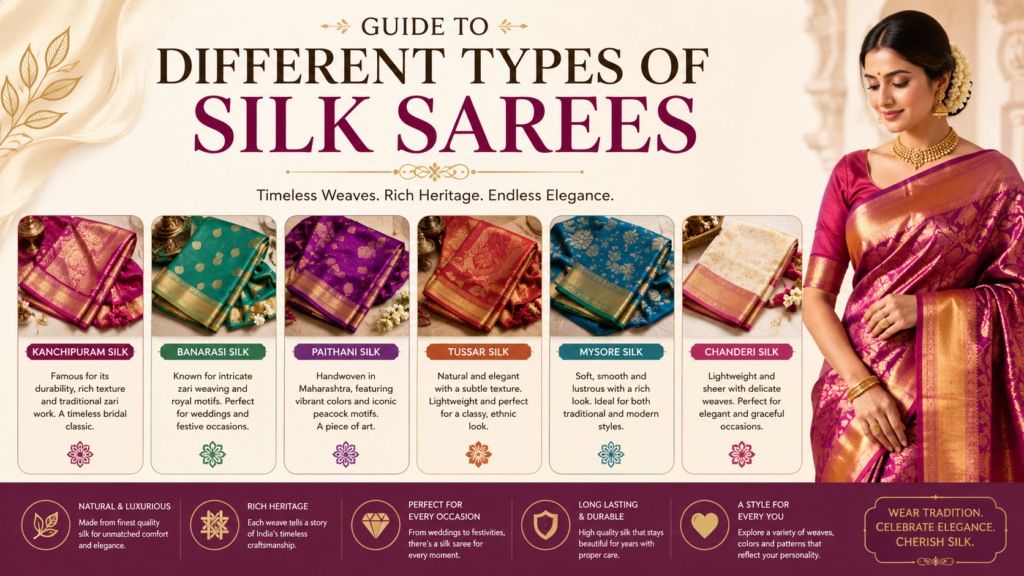
Types of Silk Sarees are among the most admired and cherished forms of traditional Indian attire. Silk sarees have long been considered the epitome of elegance, luxury, and timeless beauty in Indian fashion. Whether worn at weddings, festivals, family celebrations, or special occasions, a silk saree carries a sense of tradition and sophistication that few garments can match. India is home to some of the world’s most exquisite silk weaving traditions. Each region has developed unique techniques, patterns, and weaving styles that make its silk sarees distinct. From the opulent Banarasi sarees of North India to the vibrant Kanjeevaram masterpieces of the South, every silk saree tells a story of craftsmanship, culture, and heritage. For those looking to invest in a silk saree, understanding the different varieties can help in selecting the perfect piece. This comprehensive guide from Rashmiwala explores the most popular types of silk sarees, their characteristics, and how to choose one that suits your style and occasion. Why Silk Sarees Remain Timeless Silk has been treasured for centuries because of its natural sheen, luxurious texture, and durability. Unlike many fashion trends that come and go, silk sarees continue to remain relevant across generations. Some reasons behind their enduring popularity include: Elegant appearance Rich cultural significance Exceptional craftsmanship Long-lasting durability Suitable for celebrations and formal occasions Ability to become treasured heirlooms A well-maintained silk saree can retain its beauty for decades, making it both a fashion statement and an investment. Understanding Silk as a Fabric Silk is a natural fiber produced from silkworm cocoons. It is known for its smooth texture, lustrous finish, and lightweight comfort. Premium silk sarees are valued for: Softness Breathability Strength Rich drape Luxurious shine Different weaving methods and regional traditions create unique silk saree varieties, each with its own appeal. Banarasi Silk Sarees Among the most celebrated silk sarees in India, Banarasi sarees originate from Varanasi in Uttar Pradesh. Key Features Intricate zari work Mughal-inspired motifs Floral and paisley designs Luxurious silk texture Grand bridal appeal Banarasi sarees are particularly popular for weddings and ceremonial occasions due to their regal appearance. Best Occasions Weddings Receptions Religious ceremonies Grand celebrations Their timeless elegance makes them one of the most sought-after silk sarees in India. Kanjeevaram Silk Sarees Kanjeevaram sarees, woven in Tamil Nadu, are known for their exceptional quality and vibrant designs. Key Features Pure mulberry silk Contrasting borders Temple-inspired patterns Rich color combinations Durable weaving structure These sarees are often considered a symbol of South Indian heritage and luxury. Best Occasions Bridal wear Festivals Traditional celebrations Family functions A genuine Kanjeevaram silk saree is often passed down through generations as a cherished heirloom. Tussar Silk Sarees Tussar silk is known for its natural texture and understated elegance. Unlike highly polished silks, Tussar has an earthy charm that appeals to women who appreciate handcrafted beauty. Key Features Rich natural texture Lightweight feel Unique golden sheen Breathable fabric Handcrafted appearance Best Occasions Cultural events Daytime celebrations Formal gatherings Festive occasions Tussar silk sarees perfectly blend sophistication with comfort. Mysore Silk Sarees Mysore silk sarees are renowned for their simplicity and refined elegance. Produced in Karnataka, they are crafted using high-quality silk and feature minimal yet graceful designs. Key Features Smooth finish Lightweight comfort Elegant zari borders Rich silk quality Timeless appeal Best Occasions Corporate events Religious functions Family gatherings Formal occasions Women who prefer understated luxury often choose Mysore silk sarees. Paithani Silk Sarees Originating from Maharashtra, Paithani sarees are famous for their intricate handwoven artistry. Key Features Peacock motifs Floral patterns Vibrant colors Rich pallu designs Handcrafted excellence Each Paithani saree is considered a masterpiece due to the skill and time required to create it. Best Occasions Weddings Traditional celebrations Festive events Cultural functions Their artistic appeal makes them highly valued among collectors. Chanderi Silk Sarees Chanderi sarees combine silk and cotton to create lightweight yet elegant fabrics. Key Features Sheer texture Delicate motifs Soft sheen Lightweight drape Comfortable wear Best Occasions Daytime events Office functions Social gatherings Festive celebrations These sarees offer sophistication without feeling overly heavy. Organza Silk Sarees Modern fashion enthusiasts increasingly favor organza silk sarees for their contemporary appeal. Key Features Lightweight structure Transparent elegance Embroidered detailing Fashion-forward designs Stylish drape Best Occasions Parties Engagement ceremonies Fashion events Modern celebrations Their graceful appearance makes them highly popular among younger women. Raw Silk Sarees Raw silk sarees showcase the natural texture of silk fibers and offer a distinct handcrafted look. Key Features Slightly coarse texture Rich appearance Structured drape Artistic finish Traditional appeal Best Occasions Festive gatherings Cultural celebrations Family functions Traditional ceremonies Raw silk provides an excellent balance between luxury and authenticity. How to Choose the Right Silk Saree Selecting the ideal silk saree depends on several factors. Consider the Occasion For Weddings Choose: Banarasi silk Kanjeevaram silk Paithani silk For Festivals Choose: Tussar silk Raw silk Chanderi silk For Formal Events Choose: Mysore silk Organza silk Lightweight silk blends Consider Personal Style Your fashion preferences should influence your choice. If you enjoy traditional grandeur, Banarasi and Kanjeevaram sarees are ideal. If you prefer minimalist sophistication, Mysore and Chanderi silk sarees may be better suited. Consider Comfort Lighter silk sarees such as Chanderi and Organza are easier to carry for extended periods, while heavier bridal silks create a more dramatic appearance. Caring for Silk Sarees Proper maintenance helps preserve the beauty and longevity of silk sarees. Storage Tips Store in muslin cloth Avoid plastic packaging Keep away from direct sunlight Refold periodically Cleaning Tips Prefer professional dry cleaning Avoid harsh detergents Handle delicate embroidery carefully Good care ensures that silk sarees remain beautiful for generations. Why Quality Matters When Buying Silk Sarees Authentic silk sarees offer several advantages: Better drape Superior durability Rich appearance Long-term value Timeless elegance Investing in premium-quality silk ensures that your saree remains a cherished part of your wardrobe for years to come. Conclusion Silk sarees represent the finest combination of tradition, craftsmanship, and luxury in Indian fashion. Whether you are drawn to the regal

How Traditional Weaving Techniques Shape Modern Fashion Today
Blog

How Traditional Weaving Techniques Shape Modern Fashion Today

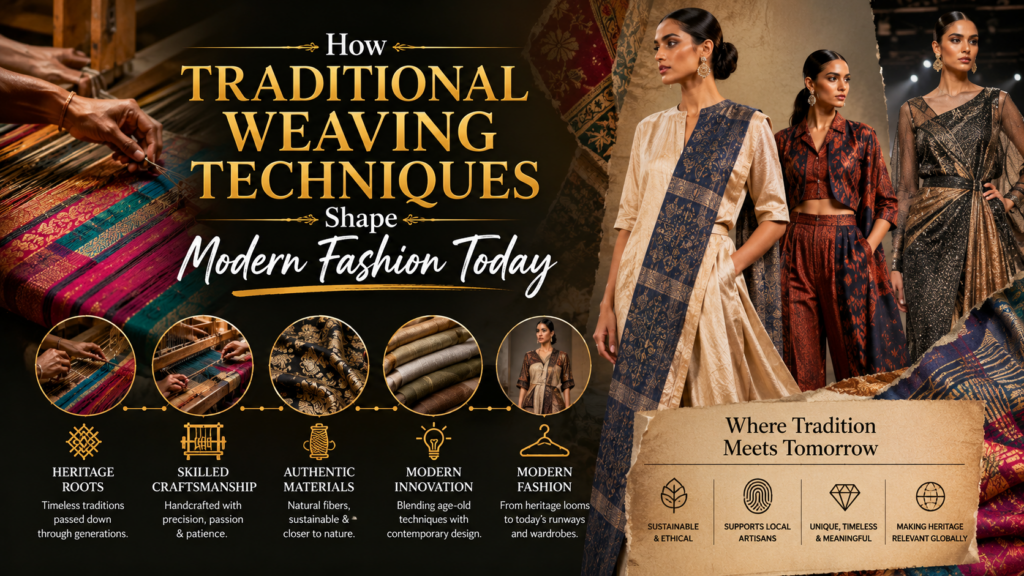
Fashion is often associated with innovation, changing trends, and modern design. However, behind many of today’s most celebrated fashion collections lies a rich foundation of traditional craftsmanship. Among the most influential elements of this heritage are traditional weaving techniques, which have been passed down through generations and continue to inspire contemporary designers worldwide. From handcrafted silk sarees and heritage textiles to luxury runway collections and sustainable fashion movements, traditional weaving remains a powerful force in the fashion industry. These time-honored methods not only preserve cultural identity but also contribute to the creation of unique, high-quality garments that stand apart in an age of mass production. As consumers increasingly value authenticity, sustainability, and craftsmanship, traditional weaving techniques are experiencing a remarkable revival. Understanding their influence helps explain why they continue to play such an important role in shaping modern fashion. Understanding Traditional Weaving Techniques Weaving is one of the oldest textile-making methods in human history. It involves interlacing two sets of threads—warp and weft—to create fabric. While the basic principle remains unchanged, different regions have developed unique weaving styles, patterns, and techniques over centuries. Traditional weaving often relies on handlooms and skilled artisans who dedicate years to mastering their craft. Unlike machine-produced textiles, handwoven fabrics showcase intricate details, subtle variations, and artistic character that make every piece unique. Many of these techniques are deeply connected to local cultures, reflecting regional stories, customs, and artistic traditions through fabric design. The Rich Heritage Behind Handwoven Textiles Traditional weaving represents more than textile production—it embodies generations of knowledge and cultural heritage. Across India and other parts of the world, weaving communities have preserved their craft through centuries of social and economic change. Examples of renowned traditional weaving traditions include: Banarasi Weaving Known for luxurious silk fabrics and intricate zari work, Banarasi weaving remains a symbol of elegance and craftsmanship. These textiles continue to inspire bridal fashion and luxury apparel. Kanjeevaram Silk Weaving Originating in South India, Kanjeevaram weaving is celebrated for its vibrant colors, durability, and detailed borders. Modern designers frequently reinterpret these fabrics for contemporary audiences. Chanderi Weaving Lightweight and sophisticated, Chanderi textiles blend silk and cotton to create elegant fabrics suitable for both traditional and modern garments. Ikat Weaving Ikat involves resist-dyeing threads before weaving, resulting in distinctive patterns that are highly valued in modern fashion collections. Handloom Cotton Traditions Handwoven cotton fabrics remain popular for their comfort, breathability, and eco-friendly qualities, making them increasingly relevant in sustainable fashion. Why Modern Fashion Is Embracing Traditional Weaving As fashion consumers become more conscious about quality and sustainability, traditional weaving techniques offer solutions that align with modern values. Authentic Craftsmanship Today’s consumers appreciate products with a story behind them. Handwoven textiles provide authenticity that mass-produced fabrics often lack. Each handloom fabric reflects the artisan’s skill, making garments feel more personal and meaningful. Superior Quality Traditional weaving techniques often produce durable fabrics designed to last for years. High-quality craftsmanship contributes to better texture, structure, and longevity. Rather than following disposable fashion trends, many consumers now prefer timeless pieces made from premium woven textiles. Unique Designs Handwoven fabrics frequently feature distinctive patterns, motifs, and textures that cannot be perfectly replicated by machines. This uniqueness appeals to fashion brands seeking originality and exclusivity. The Rise of Sustainable Fashion One of the most significant reasons traditional weaving remains relevant today is its connection to sustainability. The fashion industry faces increasing scrutiny regarding environmental impact. Fast fashion contributes to excessive waste, pollution, and resource consumption. Traditional weaving offers a more sustainable alternative by emphasizing: Small-scale production Natural fibers Reduced energy consumption Longer garment lifespan Support for local communities Many handloom weaving processes require minimal industrial machinery, reducing their environmental footprint compared to mass manufacturing systems. As sustainability becomes a priority, handwoven textiles are increasingly viewed as responsible fashion choices. How Designers Incorporate Traditional Weaving Contemporary designers frequently draw inspiration from traditional weaving techniques to create fresh and innovative collections. Fusion Fashion One of the most popular approaches is blending heritage textiles with modern silhouettes. Examples include: Handwoven jackets Contemporary dresses using traditional fabrics Modern co-ord sets crafted from heritage textiles Indo-Western garments featuring woven motifs This fusion allows younger generations to connect with traditional craftsmanship in a modern context. Luxury Fashion Collections Luxury fashion brands often collaborate with artisan communities to develop exclusive woven textiles. Handcrafted fabrics add prestige, authenticity, and artistic value to high-end collections, helping brands differentiate themselves in competitive markets. Textile Innovation Designers increasingly experiment with traditional weaving structures while introducing new colors, materials, and applications. These innovations ensure that heritage techniques remain relevant without losing their cultural essence. The Influence of Traditional Weaving on Global Fashion Traditional weaving is no longer limited to regional markets. Global fashion houses and international designers regularly incorporate woven textiles inspired by cultural traditions. Fashion weeks around the world feature collections showcasing: Handwoven silks Heritage cotton fabrics Artisan-crafted textiles Sustainable woven materials The global appreciation for craftsmanship has elevated traditional weaving from a local art form to an internationally recognized fashion asset. This recognition also helps create economic opportunities for artisan communities while promoting cultural exchange. Empowering Artisan Communities The continued demand for traditional weaving plays a vital role in supporting artisans and preserving heritage skills. By purchasing handwoven garments, consumers contribute to: Rural employment Skill preservation Cultural sustainability Economic development Artisan empowerment Many fashion brands now emphasize ethical sourcing and direct partnerships with weaving communities to ensure fair compensation and long-term sustainability. These initiatives help keep traditional weaving alive for future generations. Technology Meets Tradition While traditional weaving remains rooted in heritage, technology has opened new opportunities for growth. Digital platforms enable artisans and weaving cooperatives to reach global audiences. Social media, e-commerce, and online marketplaces allow consumers to discover handcrafted textiles more easily than ever before. Technology also helps document and preserve weaving techniques, ensuring valuable knowledge is not lost over time. Rather than replacing traditional craftsmanship, technology often serves as a bridge connecting artisans with modern markets. Challenges Facing Traditional Weaving Despite growing appreciation, traditional weaving

The Rich History and Evolution of Indian Sarees Explained
Blog

The Rich History and Evolution of Indian Sarees Explained

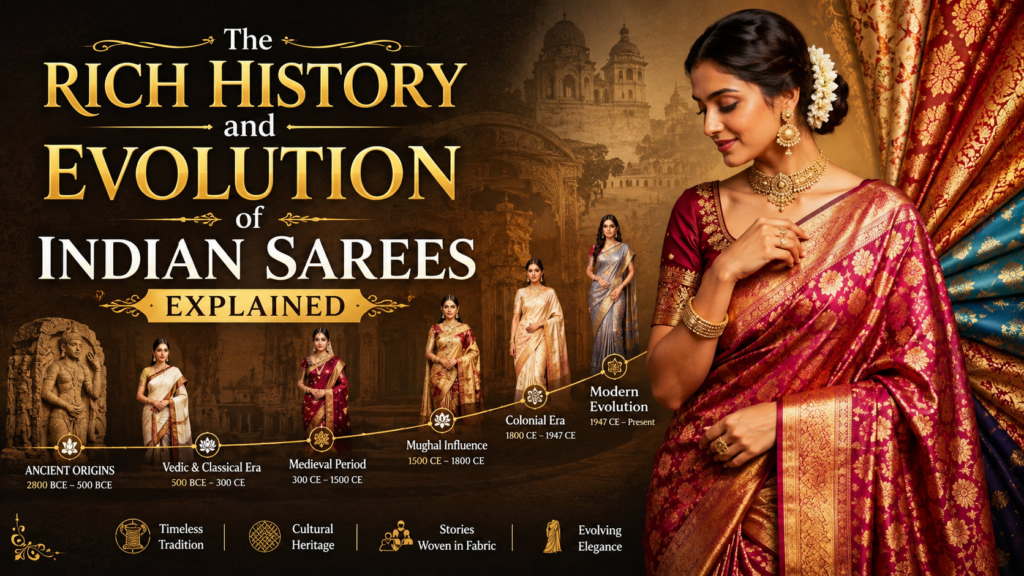
The saree is more than just a piece of clothing—it is a timeless symbol of Indian culture, heritage, and femininity. Worn by millions of women across generations, the saree has remained one of the most iconic garments in the world. While fashion trends come and go, the saree continues to evolve while preserving its traditional roots. From ancient civilizations to contemporary fashion runways, the journey of the Indian saree reflects the country’s rich cultural history, artistic craftsmanship, and changing social landscape. Understanding the history and evolution of Indian sarees offers valuable insight into how this elegant attire became a global symbol of grace and sophistication. The Origins of the Indian Saree The history of the saree dates back more than 5,000 years, making it one of the oldest surviving garments in the world. Historical evidence suggests that draped garments similar to modern sarees were worn during the Indus Valley Civilization around 2800–1800 BCE. Ancient sculptures, paintings, and literary texts depict women wearing unstitched lengths of fabric draped around their bodies. Unlike modern stitched garments, these fabrics provided flexibility, comfort, and adaptability to different climates and lifestyles. The word “saree” is believed to have originated from the Sanskrit term “Sati,” meaning a strip of cloth. Over centuries, this simple draped fabric transformed into a sophisticated garment with regional styles, weaving techniques, and artistic embellishments. Sarees in Ancient India During the Vedic period, clothing was primarily unstitched. Men and women wore garments that could be wrapped and draped in various ways. Sarees became associated with modesty, elegance, and social identity. Ancient Indian literature, including the Rigveda and Mahabharata, contains references to garments resembling sarees. These texts highlight the importance of draped clothing in Indian society and its connection to cultural traditions. During this period, natural fibers such as cotton and silk were widely used. India became renowned for producing high-quality textiles that were exported to many parts of the world. Influence of Different Dynasties The evolution of the saree was significantly shaped by various dynasties and empires that ruled different regions of India. Mauryan and Gupta Periods The Mauryan and Gupta eras are often considered golden ages of Indian art and culture. During these periods, sarees became more refined, featuring decorative borders and intricate weaving techniques. Women from royal families often wore luxurious silk sarees adorned with gold threads and precious embellishments. Textile craftsmanship flourished, laying the foundation for many traditional weaving practices that continue today. Mughal Influence The arrival of the Mughal Empire introduced new artistic elements to Indian textiles. Persian-inspired motifs, floral patterns, embroidery techniques, and rich color palettes became popular. Luxurious fabrics such as silk, brocade, and zari work gained prominence. Mughal influence contributed significantly to the development of iconic saree styles known for their intricate craftsmanship and regal appearance. Regional Diversity in Saree Traditions One of the most remarkable aspects of Indian sarees is their regional diversity. Different states developed unique weaving techniques, fabrics, and draping styles based on local traditions and cultural influences. Banarasi Sarees Originating from Varanasi, Banarasi sarees are famous for their elaborate zari work, intricate patterns, and luxurious silk fabric. They remain a preferred choice for weddings and grand celebrations. Kanjeevaram Sarees Produced in Tamil Nadu, Kanjeevaram sarees are known for their rich silk, vibrant colors, and contrasting borders. These sarees are highly valued for their durability and timeless beauty. Bandhani Sarees Popular in Gujarat and Rajasthan, Bandhani sarees feature intricate tie-dye patterns created through traditional resist-dyeing techniques. Chanderi Sarees Known for their lightweight texture and elegant appearance, Chanderi sarees combine silk and cotton to create graceful garments suitable for various occasions. Tussar Silk Sarees Tussar silk sarees are appreciated for their natural texture, earthy elegance, and handcrafted appeal. They represent India’s rich textile heritage and artisanal craftsmanship. The British Era and Textile Transformation The colonial period brought significant changes to India’s textile industry. British industrialization affected traditional handloom weaving communities, leading to economic challenges for artisans. Despite these difficulties, sarees remained deeply rooted in Indian society. During India’s freedom movement, handwoven sarees became symbols of self-reliance and national pride. The promotion of hand-spun and handwoven fabrics encouraged support for local artisans and helped preserve traditional weaving techniques. Sarees in Modern India Following independence, the saree continued to evolve alongside changing lifestyles and fashion preferences. Urbanization and modernization introduced new fabrics, colors, and designs. Designers began experimenting with contemporary patterns while maintaining traditional craftsmanship. Modern sarees now feature: Lightweight fabrics Digital prints Contemporary embroidery Fusion styling Innovative draping techniques These adaptations have made sarees more versatile and accessible to younger generations. Bollywood’s Role in Popularizing Sarees Indian cinema has played a major role in keeping sarees relevant across generations. Iconic film scenes featuring actresses in elegant sarees have influenced fashion trends for decades. Bollywood helped transform the saree from traditional attire into a glamorous fashion statement. Different draping styles, fabrics, and color combinations showcased on screen often become popular among consumers. Today, celebrities, influencers, and fashion icons continue to inspire saree trends through social media and public appearances. The Global Appeal of Indian Sarees The beauty of Indian sarees has attracted international attention. Fashion enthusiasts worldwide admire sarees for their elegance, versatility, and cultural significance. Global designers have incorporated saree-inspired elements into contemporary collections, while Indian designers regularly showcase sarees on international fashion platforms. The growing appreciation for sustainable and handcrafted fashion has further increased demand for traditional Indian textiles and artisanal weaving techniques. Sustainability and the Future of Sarees As consumers become more conscious about sustainable fashion, sarees are gaining renewed popularity. Their durability, timeless appeal, and handcrafted nature align with modern sustainability values. Handloom sarees support local artisans, preserve traditional skills, and promote environmentally responsible production practices. The future of sarees lies in balancing innovation with tradition. Designers continue to experiment with contemporary aesthetics while honoring centuries-old weaving heritage. Why Sarees Remain Timeless Few garments possess the cultural depth and enduring relevance of the Indian saree. It adapts effortlessly to changing trends while maintaining its traditional identity. Whether worn for weddings,

Scroll to Top